Before we jump into the wonderful world of mixing metals in a space, know this: yes, you can mix metals! I get asked this question ALL THE TIME by clients. In fact, I highly recommend mixing metals. A room with the same metal everywhere tends to look like a builder bought hardware in bulk and installed it just to be efficient (and cheap).
Although we’re not big on hard-and-fast rules here at Allis Interiors, there is a way to mix metals strategically within a space. Keep reading to learn how to mix metals with confidence.
Use a Maximum of Two to Three Metals
To keep a room feeling cohesive, and not chaotic, limit your selection to two or three metals. In smaller spaces—like a powder room—two metals often feel just right. In larger rooms, like a primary bathroom or kitchen, the world is your oyster. Think polished silver and antique brass, or oil rubbed bronze and brushed nickel.
And yes, the finish—polished, brushed, or matte—counts as one metal type. (So, a brushed nickel + a polished nickel = two metals).
In larger spaces where you’re mixing more than two, be sure to repeat each metal at least once. It doesn’t have to be a perfect 50/50 split; one metal can take the lead while the others play supporting roles. Just make sure each metal shows up in at least two places for visual balance.
Caveat: We’re all about the old and quirky. So if you’ve chosen your main metals but stumble across an antique soap dish in a totally different finish, go for it! Add the unexpected. It’ll make your space look even more curated and intentional.

You Can—and Should—Mix Sheens
Fall in love with brushed nickel, but also want to add some unlacquered brass to warm things up? Do it. Mixing matte and polished finishes adds layers and interest to your design.
That said, avoid mixing sheens within the same metal type. For example, pairing polished nickel with brushed nickel can look like the two are competing rather than complementing each other. Keep your sheen variations across different metals instead.
Opt for Timeless Metals
When designing a space, I love pulling from history and using metals that feel timeless. My favorite example? Unlacquered brass. It ages and patinas beautifully, giving a lived-in, character-rich look over time.
We know some clients shy away from polished metals like nickel or chrome because they show water spots and require more upkeep—but that lived-in feel is always worth it. Perfect is overrated; character is forever.

Use the Same Metal for Like Pieces
This isn’t a strict rule, but it’s a helpful guideline. When mixing metals in a bathroom, for example, I like to use the same metal for like pieces.
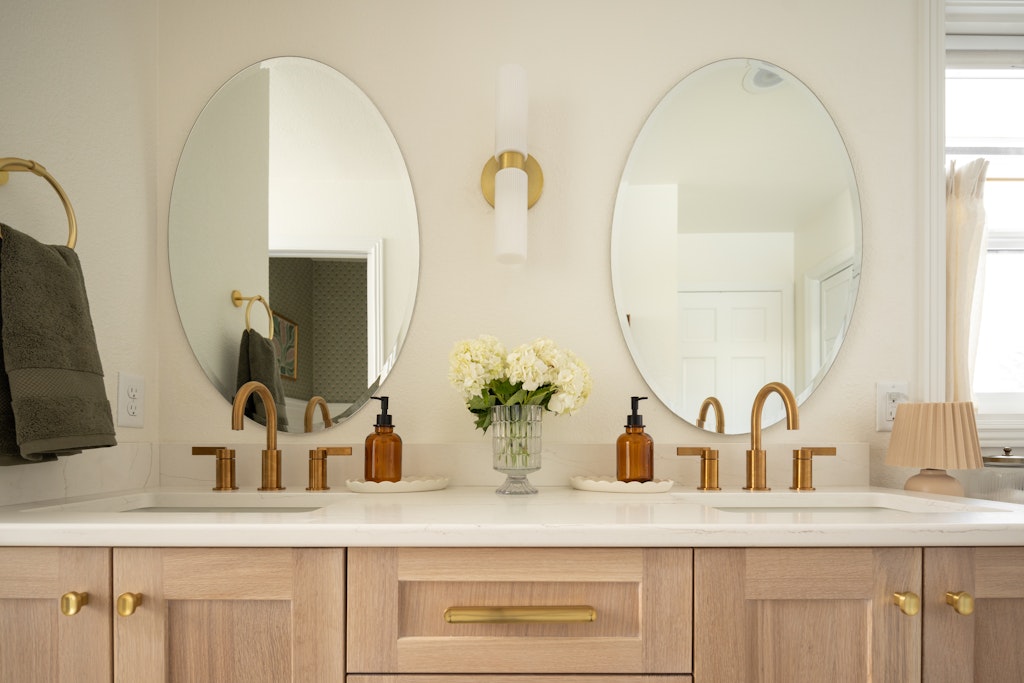
For example, if you’ve opted for a polished nickel faucet for the vanity, keep the rest of the plumbing hardware (bathtub and shower plumbing fixtures) polished nickel too. This smooth transitions between areas of the space and is also a great callback; a design tactic we like to use to create great flow and cohesion.
Final Thoughts
For a thoughtful and curated look, don’t be afraid to mix those metals! The most important design rule, always, is to do what you love. This is your home—and life’s too short to decorate for the next owner.
Need help selecting finishes for your space? We’d love to support you! Click here to book your discovery call and start the conversation OR fill out our contact form here.